 Home
Home
 Info
Info

7 Reasons Why You Have To Visit Arguineguin

Arguineguín town (or South Oslo as it's known in the winter) is south Gran Canaria's only local coastal town. At heart, it's still a fishing town even though it hosts thousands of Nordic snowbirds each winter and has a hugely popular weekly market.
You've Arrived in Arguineguín: Here's What To Do First

Walk downhill in Arguineguín until you hit the sea and it's an easy place to explore; the seafront promenade runs the whole length of town. All you have to do to start is work out where you are.
Santa Lucía: South Gran Canaria's Discreet Rural Tourism Hub

Santa Lucia has quietly become south Gran Canaria rural tourism centre. With its palm-filled valleys, traditional houses and mellow way of life it deserves to be better known. Perhaps it's best if it stays out of the brochures.
Arinaga: Gran Canaria's Most Improved Town

Arinaga's attractive promenade, a great natural swimming pool and decent seafront restaurants make it an excellent east coast lunch and swim stop. Just up the road is the world-famous El Cabron dive site and the unassuming but ecologically important Arinaga dunes reserve.
Agüimes Hill Town

The cobbled old town, with its vast church and squat, heat-proof Canarian houses is the prettiest example of a Gran Canaria hill town in east Gran Canaria. It's well worth a wander.
San Mateo: Gran Canaria's Farming Town

You don't see many wellies in Gran Canaria but San Mateo, as the island's main farming town, is where they are concentrated. With rich soils and plenty of rain, it's main focus has always been agriculture rather than tourism. Despite a madcap plan for a cable car that doesn't look like changing anytime soon.
Santa Brigida: Gran Canaria Hill Town With A Pretty Market
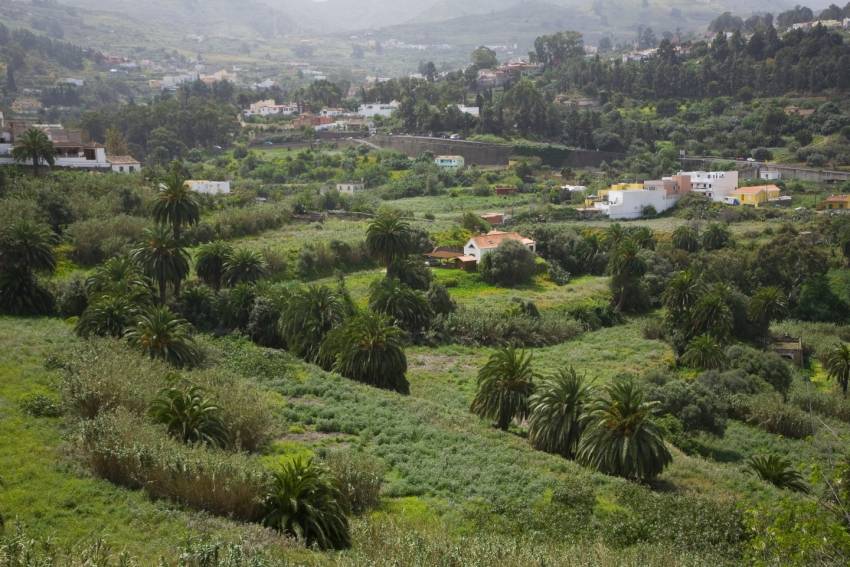
Santa Brigida town was used by the British as their summer Hill Station when they controlled the coal trade in Las Palmas port in the late 19th and early 20th Century. Nowadays it a quiet residential town with a great weekend market (and a great wine stall) and a couple of excellent restaurants.
Cliff Edge Views In Sleepy Moya
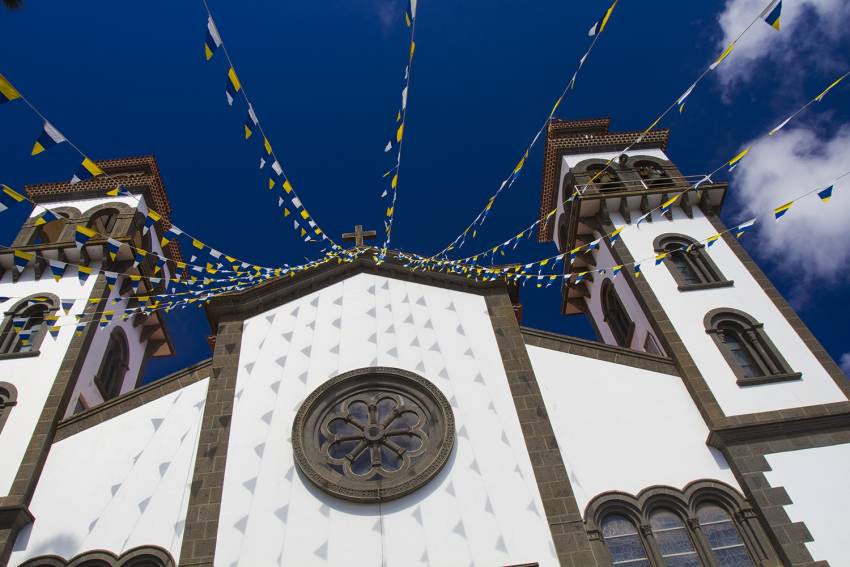
Moya has two claims for fame: Biscuits and a cliff-edge church square with a view of the deep Barranco behind the town. The view is spectacular, the biscuits not so much.
Moya church is a whitewashed Canarian church with stone edging in Neoclassical style. It's pretty but nothing more. However, it stands in a square right on the edge of the deep Barranco de Moya ravine. The view from the edge makes your tummy flip and is well worth a stop.
The town's famous bizcochos de Moya are much less exciting: Just dry biscuits with sugar on top that everyone in Gran Canaria has in the cupboard but nobody ever seems to eat.
Perhaps the real highlight of Moya is the walk around the Los Tilos de Moya laurel forest about five minutes drive from town. This is one of only two patches of laurels that survived the deforestation that followed colonisation and is one of the most biodiverse spots in Europe with dozens of rare Canarian plants. The circular walk takes you up the side of the valley and through the laurels.
Guia: Gran Canaria's Cheese Town
It says a lot about Guía that it's cheese is more famous than the actual town. It's pretty enough but a sleepy kind of place, especially compared with Galder next door.
Santa Maria de Guía's church square and the cobbled streets running off it have their charm. The problem with Guía from a vistor's point of view is that there isn't much do there except for look at it. The Sunday market in the square only has five stalls: It's the place to go to get great Flor de Guia cheese right at source but doesn't sell much else.
Flower cheese
Flor de Guía is a soft, creamy and slightly bitter goat and sheep cheese with a faint odour of socks. It comes in wheels only a few inches thick and tends to sag with age. It's great stuff and is made with cardoon flower sap rather than rennet, making it the only local cheese suitable for veggies.
Cheese festival
Guía perks up during the annual Fiesta de Queso (cheese festival) in April/ May. It's the time to visit with lots of cheese and food stalls and general celebrations of anything cheesy.
If you're in Guía outside fiesta time, head to La Quesera organic cafe for a great selection of local cheese and wine. It's in a 19th Century house and chapel and has an organic garden in its courtyard. The address is Calle Pérez Galdós 27.
God and Garlic Sausage In Teror
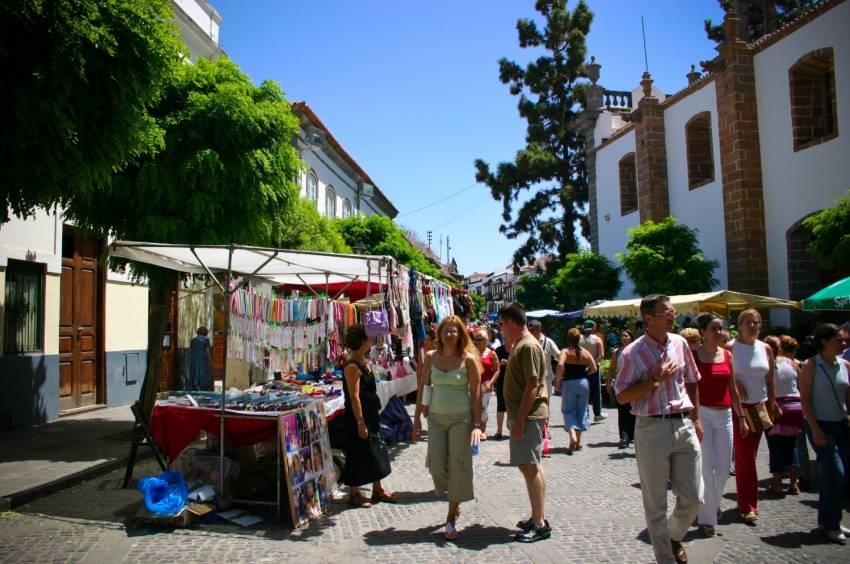
Teror is on all the lists of places you have to see in Gran Canaria and is one of the island's prettiest towns with lovely cobbled streets and wooden balconies. That said, the religious angle overwhelms all others in Teror, apart from the pungent sausage.
Gran Canaria Info recommends:
- Default
- Title
- Date
- Random


Join the Gran Canaria Info newsletter list


Features
Gran Canaria info recommends
-

Hassle-Free Gran Canaria Car Hire
-

Off The Beaten Track With A Gran Canaria Buggy Trip
-

Gran Canaria Shopping: Start At Fundgrube For Price & Quality
-

Casa Romantica: A Classic Gran Canaria Restaurant Reborn
-

Which Gran Canaria Airport Transfer Service Is The Best?
-

The Best Value Car Rental Service In Gran Canaria
- 1
Follow us on Facebook
Tip of the day
-
Tip Of The Day: Passport & Visa Requirements For Gran Canaria

Lots of people worry about flying to Gran Canaria and the Canary Islands when their passport is due to expire.
Latest articles
Who's Online
We have 5522 guests and no members online